
Josephine Carr: The Rosa Parks of 19th-Century Kent County

Handwritten account images and written account of To the Honorable William Fell Giles, Judge of the District Court of the United States for the district of Maryland. Josephine Carr vs. Edward S.L. Young, Case File 47, 1872 Term. Records of the U.S. District Court for the District of Maryland Admiralty, Record Group 21, National Archives and Records Administration, Philadelphia, Pa. View the extended record on the Chesapeake Heartland Digital Archives
The discriminatory travel experience of 1872 Kent County African American resident, Mrs. Josephine Carr, and her successful pursuit of legal redress for her grievance is both astounding and well documented. The case has been studied by several legal and history scholars, such as David Bogen of the University of Maryland, and Washington College Starr Center historian and Hodson Trust-Griswold Director, Adam Goodheart. The Starr Center is fortunate to have received scanned copies of the original handwritten account of Carr’s case, courtesy of the National Archives and Records Administration of Washington DC, which we offer for your reading pleasure during the nation’s, Kent County’s, and Chestertown’s 250th year anniversary celebrations. Previous mentions of Mrs. Carr’s experiences are contained in David S. Hogan, "Precursors of Rosa Parks: Maryland Transportation Cases between the Civil War and the Beginning of World War I," Maryland Law Review, vol. 63(4), pp.733-734, which is also cited in The Kent County Voter, Vol. 39, No. 4, March-April, 2015.
Adam Goodheart has spent the last year’s sabbatical exploring existing and hidden history about the Custom House, the Ringgolds, and many known and unknown African Americans who populated the mosaic of Kent County History. One of those people is Josephine Carr. According to his 2025 - 2026 research:
In the 19th century, long after Chestertown had ceased to be an international port, the property’s riverfront side became the town’s steamboat passenger wharf. Between the 1850s and the 1920s, vessels regularly docked there to embark and disembark people traveling between Baltimore and various landing places along the Chester River (1).
Josephine Carr was African American schoolteacher in Kent County during the Reconstruction era,a time when this could be hazardous work. In the aftermath of the Civil War, at least two local Blackschoolhouses were burned by white vigilantes who opposed the federal government’s support ofeducation for newly emancipated freed people.
On May 14, 1872, Carr’s courage was tested when she traveled across the Bay from Baltimoreaboard the steamer Chester. Perhaps fatigued from her journey — or perhaps simply tired ofsubmitting to discrimination — she defied the steamboat company’s rules and took a seat in the whites-only main cabin. The captain and a white passenger forcibly dragged her from her seat and, cursing, pushed her into the Blacks-only section of the boat.
Refusing to submit quietly, Carr spent the rest of the voyage standing outside on the deck rather than sitting in the segregated cabin. On reaching the next stop — the Custom House wharf in Chestertown — she disembarked rather than continue to her destination, a village ten miles upriver. Two weeks later, she filed a civil suit against the steamboat company in federal court.
Remarkably, Carr won her case. Judge William F. Giles — a white former slaveholder — decreed that in light of “the great changes which have taken place in the country” since Emancipation, public transportation must no longer be segregated on the basis of race. He also awarded Carr $25 in damages.
Unfortunately, Giles’s ruling never took widespread effect. Desegregation in Maryland — and most other former slaveholding states — would not happen for another century. Yet Josephine Carr was, in a sense, a forgotten Rosa Parks, generations ahead of her time.
The young schoolteacher may or may not have known the exact history of the Custom House site. But no doubt she could have guessed that once, not so very long ago, enslaved Africans had taken their first steps into American enslavement on the banks of the Chester River. Carr stood in their footsteps, but she refused to travel the same path. Perhaps their resistance breathed strength into her own (2).
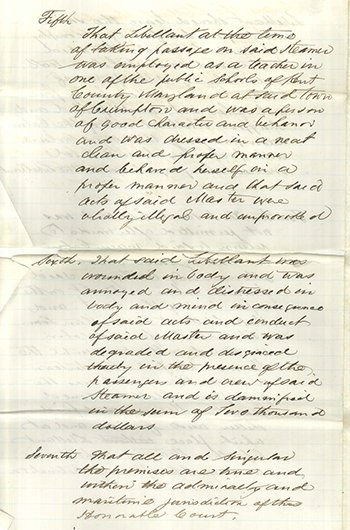




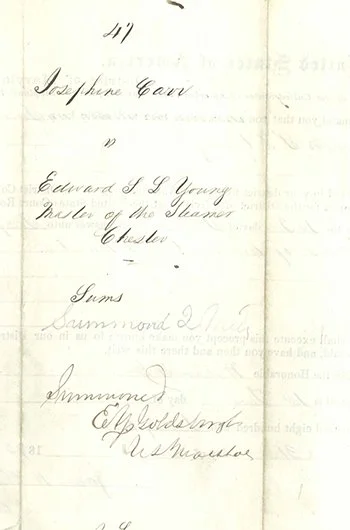
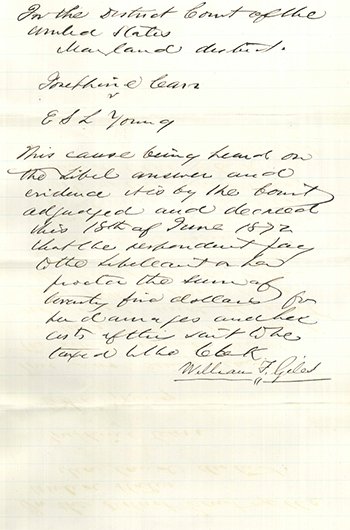

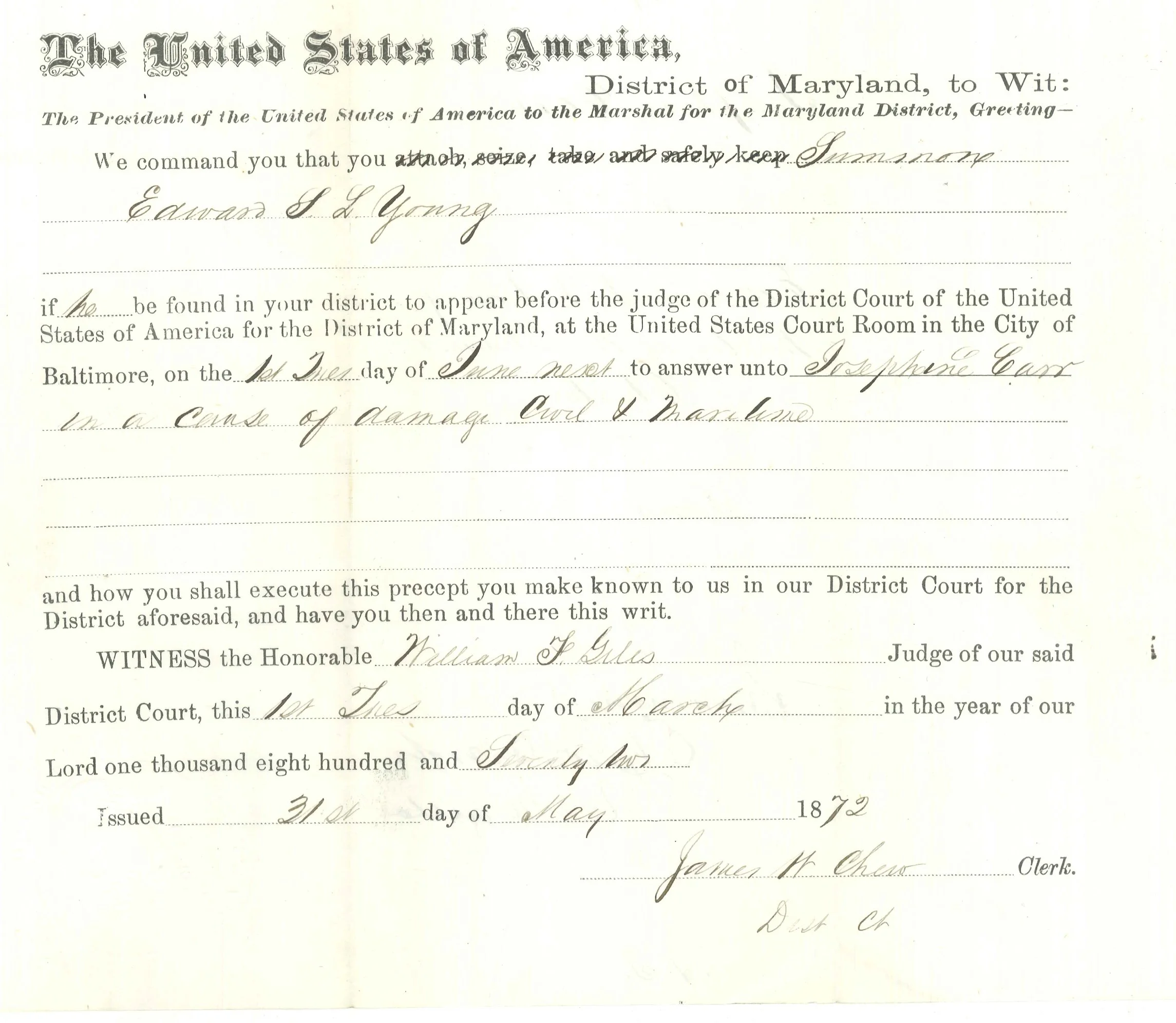
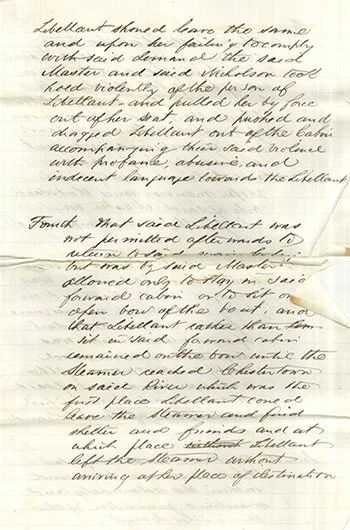
To the Honorable William Fell Giles, Judge of the District Court of the United States for the district of Maryland —
The libel of Josephine Carr a citizen of the United States at present residing in Kent County in the State of Maryland, late a passenger on board the steamer Chester of which
Edward S. L. Young now is or lately was master against the said Edward S. L. Young in a cause of damage civil and maritime alleges as follows:
First. That on the fourteenth of May 1872, the libellant being in the City of Baltimore in the District and wishing to embark for the town of Crumpton on the Chester River in the State of Maryland — went on board the said steamer Chester then lying at her wharf at said City and about to start on her usual voyage from said City to the said town of Crumpton and other places on said Chester River and took her seat in the main or general cabin of said steamer being ready and willing to pay full fare on the same when the same should be demanded of her.
Second. That shortly after the said steamer proceeded on her voyage and when at a point on the Patapsco River about opposite Fort McHenry Libellant was informed by the chambermaid of the boat that the clerk had sent her to request libellant to leave the cabin and take her place
in the forward cabin, which is a small and inconvenient place on the forward side of the steamer.
Third. That Libellant being willing to pay full fare which was exacted of all passengers using the main cabin declined to leave the same and that in a short time after such declining to leave, the said Edward S. L. Young who was then and there the Master of said steamer and one John Nicholson or Nickerson who was a passenger on board the same came into the main cabin and demanded Libellant should leave the same and upon her failing to comply with said demand the said Master and said Nicholson took hold violently of the person of Libellant and pulled her by force out of her seat, and pushed and dragged Libellant out of the Cabin accompanying their said violence with profane, abusive, and indecent language towards the Libellant.
Fourth. That said Libellant was not permitted afterwards to return to said main cabin but was by said Master allowed only to stay in said forward cabin or to sit on open bow of the boat, and that Libellant rather than sit in said forward cabin remained on the bow until the steamer reached Chestertown on said River which was the first place Libellant could leave the steamer and find shelter and friends and at which place Libellant left the steamer without arriving at her place of destination.
Fifth. That Libellant at the time of taking passage on said steamer was employed as a teacher in one of the public schools of Kent County Maryland at the town of Crumpton and was a person of good character and behavior and was dressed in a neat clean and proper manner and behaved herself in a proper manner and that said acts of said Master were wholly illegal and unprovoked.
Sixth. That said Libellant was wounded in body and was annoyed and distressed in body and mind in consequence of said acts and conduct of said Master and was degraded and disgraced thereby in the presence of the passengers and crew aboard steamer and is damnified in the sum of two thousand dollars.
Seventh. That all and singular the premises are true and within the admiralty and maritime jurisdiction of this Honorable Court.
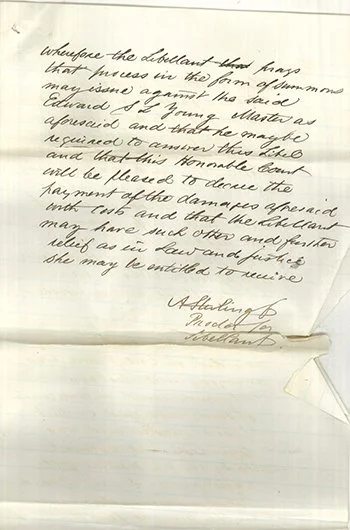
Wherefore the Libellant prays that process in the form of summons may issue against the said Edward S. L. Young Master as aforesaid and that he may be required to answer this Libel and that this Honorable Court will be pleased to decree the payment of the damages aforesaid with costs and that the Libellant may have such other and further relief as in Law and Justice she may be entitled to receive.
A. Stirling Jr. proctor for Libellant
The answer of Ed. S. L. Young a citizen of the United States at present residing in the City of Baltimore in the State of Maryland to the libel of Josephine Carr.
For first allegation, he says — That it is true the libellant did on the 14th day of May 1872 embark on the steamer Chester of which this respondent is master and about to start as alleged, and that she took her seat in the general cabin of the said steamer, but this respondent further says that upon being called upon for her fare, she only offered to pay and did pay the sum of one dollar, whereas the fare fixed by the regulations of the company owning said boat for passage in the general cabin was one dollar and twenty five cents.
To the second allegation, he says — That it is true the libellant was called upon as alleged to leave the main cabin, and take her place in the forward cabin of the boat, in which the fare fixed by said regulations was one dollar, the amount paid by the libellant, and this respondent denies that said forward cabin is very small and inconvenient and alleges on the contrary that it is very clean and well furnished, and equal in decoration and comfort to the general cabin, it having very lately been refitted and newly cushioned — the only real difference being that it is somewhat smaller than the general cabin, and this respondent further says that the said forward cabin has been specially provided for the accommodation of persons of color, of which the libellant was one, traveling upon said boat, and that it has invariably been the custom of all such persons so traveling to take their seats in said forward cabin, which has been so provided by the regulations of the company, and pay the fare of one dollar which was the amount paid by said libellant — and this respondent further says that a large number of persons of color are constantly in the habit of traveling upon said steamer and this is the first instance of any objection having been made to the accommodations provided by the said company.
To the third allegation, he says — That on the positive refusal of the libellant to leave the general or main cabin of the said steamer and take her place in the forward cabin, provided as stated in answer to the second allegation, the respondent did with the aid of a passenger on said boat gently take hold of the arm of said libellant and removed her from the said cabin, but he denies that he used any violence towards her or that he made use of any vulgar or profane language.
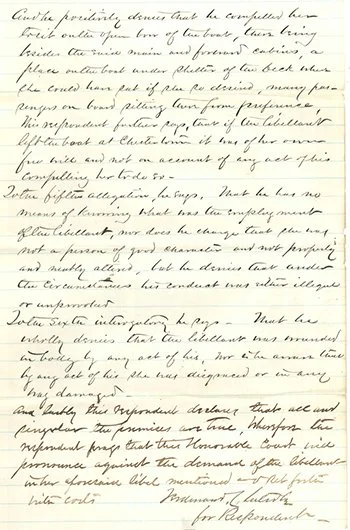
To the fourth allegation, he says, That he does not recollect that the libellant made any effort to come back into the said main cabin. And he positively denies that he compelled her to sit on the open bow of the boat, there being besides the said main and forward cabins, a place on the boat under shelter of the deck where she could have sat if she so desired, many persons on board sitting there from preference. This respondent further says, that if the libellant left the boat at Chestertown it was of her own free will and not on account of any act of his compelling her to do so.
To the fifth allegation, he says, that he has no means of knowing what was the employment of the libellant, nor does he charge that she was not a person of good character and not properly and neatly attired, but he denies that under the circumstances his conduct was either illegal or unprovoked.
To the sixth interrogatory he says — That he wholly denies that the libellant was wounded in body by any act of his, nor is he aware that by any act of his she was disgraced or in any way damaged.
And lastly this respondent declares that all and singular the premises are true, wherefore the respondent prays that this Honorable Court will pronounce against the demand of the libellant in her aforesaid libel mentioned and set forth with costs.
Ferdinand C. Latrobe for Respondent.
In the District Court of the United States Maryland district.
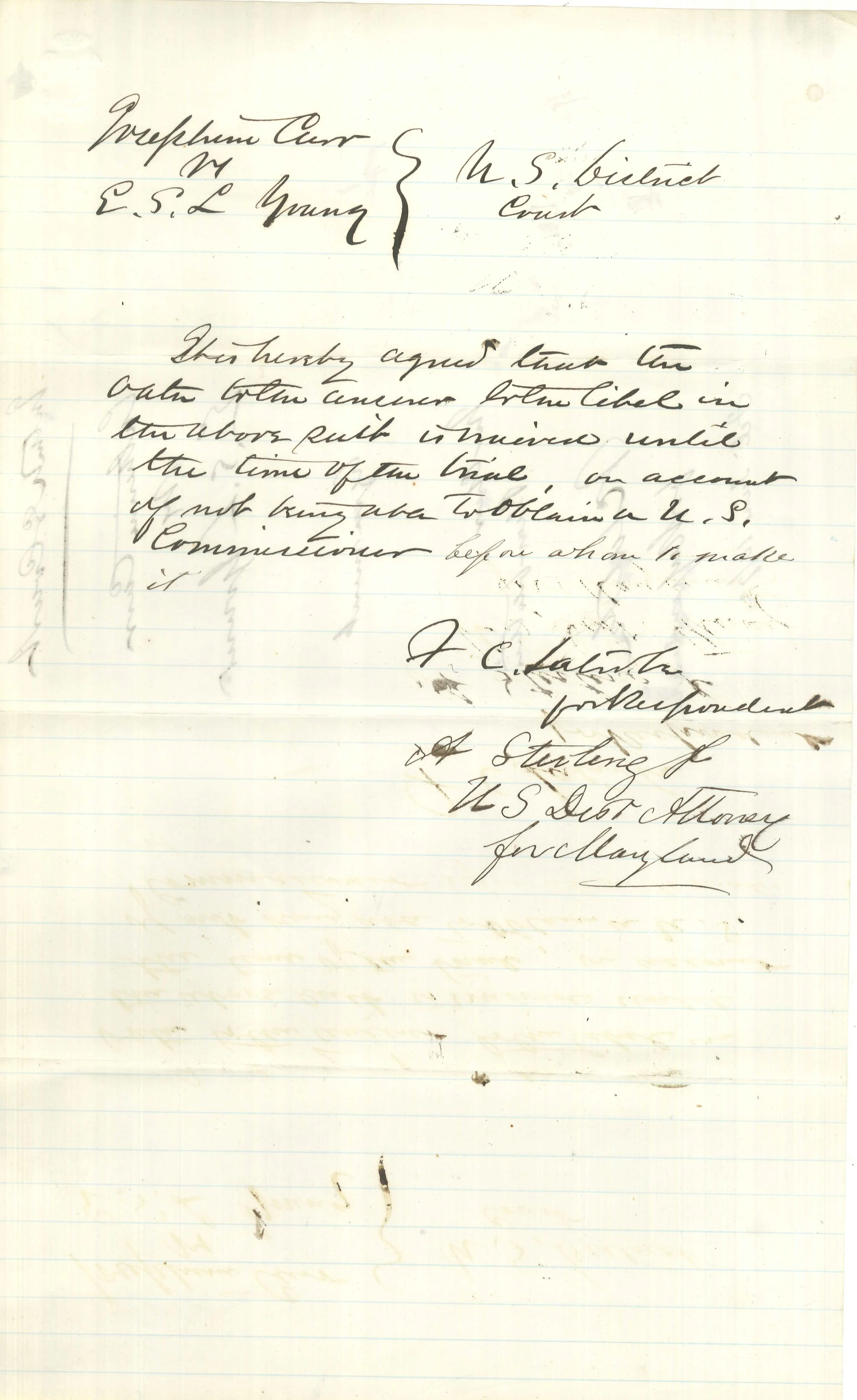
Josephine Carr v Ed. S. L. Young.
This cause being heard on the libel answer and evidence it is by the Court adjudged and decreed this 18th of June 1872 that the defendant pay to the libellant or her proctor the sum of twenty five dollars for her damages and her costs of this suit to be taxed to the Clerk.
William F. Giles.
(1) African Americans would certainly have worked aboard the 19th- and 20th-century Chester River steamboats, as well asat the wharf itself. A skilled Black cook named Catherine “Kitty” Smith worked in the Custom House preparing meals for newly arrived travelers. (Milford Murray, personal conversation, May 30, 2015.) This aspect of the site’s history still remains to be investigated in depth. Adam S. Goodheart, “Archival Investigation: Black History at the Custom House in the 18th Century,” [Unpublished Manuscript.] Starr Center for the Study of the American Experience,Washington College, Chestertown Maryland, January 2026.
(2) Baltimore Sun, June 19, 1872; New National Era, June 27, 1872; David S. Bogen, “Precursors of Rosa Parks: Maryland Transportation Cases Between the Civil War and the Beginning of World War I,” Maryland Law Review 63 (2004), pp. 721-751